


What is a Theory of Change?
A Theory of Change (ToC) is “a clearly documented (and therefore measurable) vision of how change is expected to happen” (Rick Davies).
A ToC can be developed before a project to define how change should occur, or afterwards to analyze “what actually happened.”
Traditionally designed in 5 stages, at Impact Track we focus on the 3 key steps:
- Actions: activities linked to impact objectives (training, recruiting beneficiaries, awareness campaigns, etc.)
- Outcomes: the immediate results generated by the actions
- Impacts: the long-term effects stemming from the outcomes

How to Build Your Theory of Change?
Several approaches are possible depending on your objectives:
- If you want to analyze the impact of your activities, start by listing the actions carried out.
- If you want to plan activities to reach a specific impact, begin by defining the desired impact.
Impact Track Method 👇
Step 1: Map your stakeholders
Before designing your Theory of Change, map your stakeholders and select the key ones. The ToC will then focus on these primary actors.
Step 2: List your activities and identify intermediate outcomes
- What activities are you implementing (training, awareness, distribution)?
- What are your tangible deliverables?
- What behavioral, skill, or situational changes result from these actions?
Step 3: Define the long-term impact
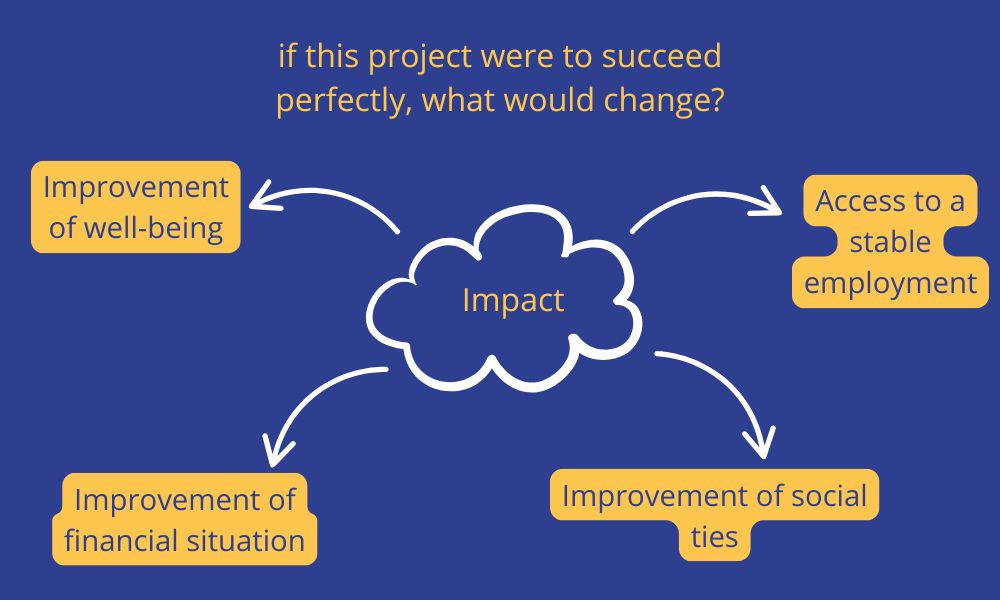
Ask yourself: What lasting change do we want to see in society, among our beneficiaries, or within our ecosystem?
Measure the most significant effects, whether positive or negative. These can include:
- skill or knowledge acquisition
- behavior change
- social or organizational transformation
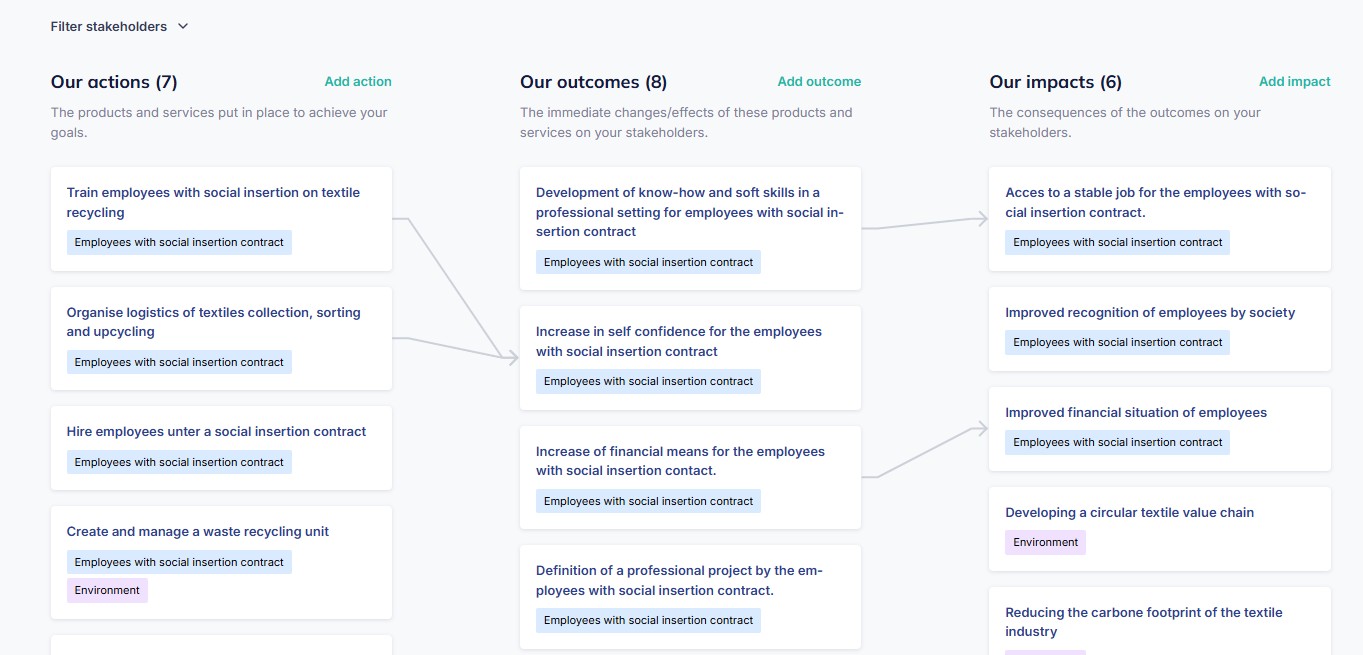
Step 4: Visualize your Theory of Change
Assemble all elements in a clear diagram with arrows and blocks.
Why is a Theory of Change Essential?
A Theory of Change forms the foundation of an impact measurement strategy. That’s why Impact Track has integrated this methodology into its training programs and digital platform.
Depending on your field of activity, a tailored Theory of Change is provided, which you can fully adapt.
It allows you to create causal links between different steps, making it easier to explain how you generate impact.
Benefits of a Theory of Change
- Clarify assumptions: make explicit what is known, assumed, and uncertain—avoiding “black boxes” between actions and outcomes.
- Communicate transparently: share a common vision with funders, project teams, and communities, backed by evidence and clear arguments.
- Define future objectives: set clear goals for upcoming initiatives.
- Align practices within your organization.
- Pitch your project effectively to partners and stakeholders.
Building Your Theory of Change: Best Practices
- Only include the essential actions needed to understand the effects.
- Ensure logical connections between actions, outcomes, and impacts (not necessarily one-to-one).
- Identify the stakeholders linked to each action or effect.
- Standardize formulations:
- Actions → verbs (Recruit, Train, Collect…)
- Outcomes → nouns (Development of…, Improvement of…, Acquisition of…)
- Involve stakeholders, especially beneficiaries, to validate or challenge assumptions and ensure priorities align with local realities.
Going Further
Want personalized support and tools to build your framework and Theory of Change? Contact us today!